

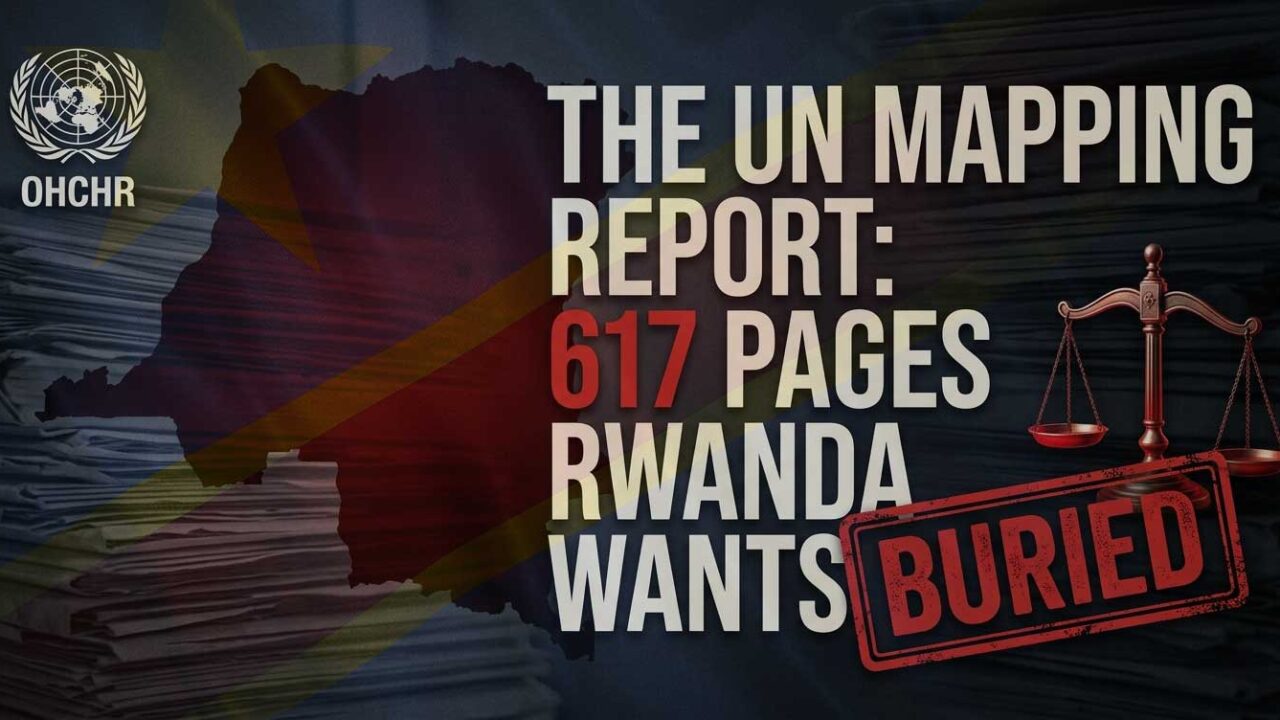
On October 1, 2010, the United Nations Office of the High Commissioner for Human Rights published a 550-page report that documented, in clinical and methodical detail, 617 of the most serious violations of human rights and international humanitarian law committed in the Democratic Republic of Congo between March 1993 and June 2003. The report had already been leaked to the French newspaper Le Monde six weeks earlier, triggering a diplomatic crisis that reached the office of the UN Secretary-General. Rwanda threatened to withdraw its 3,000 troops from the peacekeeping mission in Darfur if the document was published with its most damning findings intact.
The UN published it anyway. Paul Kagame backed down from the threat on September 24, just days before the release date. The report went out.
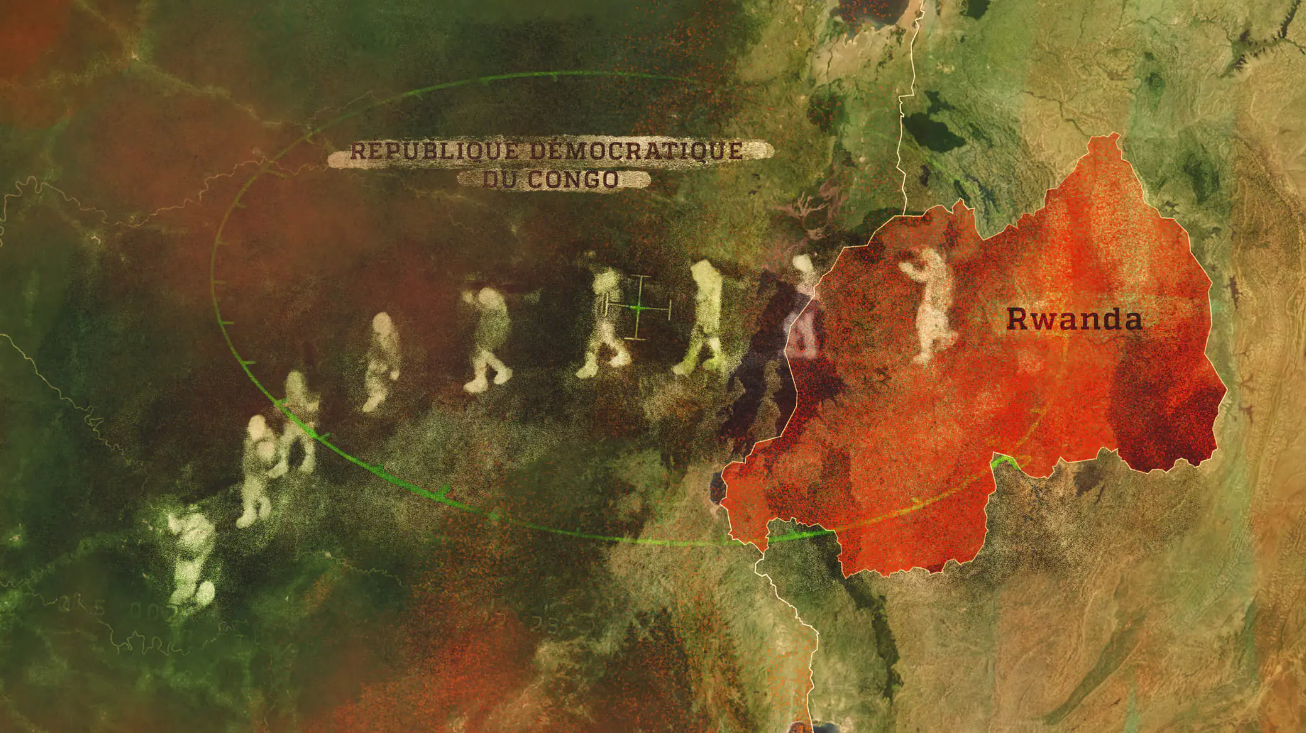
Fifteen years later, not a single individual has been prosecuted for the crimes it documented. No international tribunal has been established. The confidential database of alleged perpetrators, held in Geneva, has never been opened. And the conflict in eastern DRC, which the report traced to this period of unaddressed impunity, continues.
This is the report that Rwanda has spent fifteen years trying to make you forget. Here is what it actually says.
What the Report Is and How It Was Built
The UN Mapping Report was not a political document produced in response to a particular crisis. It was a methodical legal exercise commissioned in 2006 after the discovery of three mass graves in Rutshuru, North Kivu, containing remains from the 1996-1997 period. The UN Secretary-General approved the terms of reference in May 2007. Between October 2008 and May 2009, a team of 33 staff, including Congolese and international human rights experts and lawyers, conducted field investigations across five regional offices in the DRC. They interviewed more than 1,280 individual witnesses and collected and analysed more than 1,500 documents.
The mandate was precise: to map the most serious violations of human rights and international humanitarian law committed within the territory of the DRC between March 1993 and June 2003. The report was submitted to the High Commissioner in June 2009, reviewed, and scheduled for publication in late 2010.
Every incident listed in the report is backed by at least two independent sources. This is not allegation assembled from rumour. It is a documentary record built to the standards required for eventual judicial proceedings.
617 Incidents: The Scale of What Was Done
The report covers four distinct periods. The first, from March 1993 to June 1996, documents 40 incidents from the final years of Mobutu’s regime, including violations linked to the consequences of the Rwandan genocide spilling across the border. The second period, from July 1996 to July 1998, covers the First Congo War and the early Kabila presidency, and contains some of the most serious findings in the entire document. The third period covers the Second Congo War from 1998 to 2003. The fourth addresses ongoing violations outside these main conflict periods.
Twenty-one armed Congolese groups are named. The military forces of eight foreign states are documented as operating inside DRC during this period. Rwanda. Uganda. Burundi. Angola. Zimbabwe. Chad. And others. The report is comprehensive. It does not spare any actor. But its most consequential findings concern the actions of the Rwandan Patriotic Army, known as the RPA, and its Congolese proxy force, the Alliance des Forces Democratiques pour la Liberation du Congo-Zaire, known as the AFDL.
What Rwanda’s Army Actually Did: The Systematic Pursuit
In October 1996, RPA forces crossed into eastern Zaire and attacked refugee camps in South Kivu and North Kivu. Those camps held between 527,000 and 718,000 Hutu refugees. The early attacks killed between 6,800 and 8,000 refugees and forced the repatriation of between 500,000 and 700,000 people back to Rwanda. Many survivors fled westward into the Congolese interior.
What followed those initial camp attacks is described in Paragraph 513 of the report in language that is worth reading directly, because no paraphrase captures it adequately. The report states that the attacks resulted in an “apparently relentless pursuit and mass killing of Hutu refugees,” resulting in the deaths of “several tens of thousands.” It states that “the extensive use of edged weapons, primarily hammers, and the apparently systematic nature of the massacres of survivors after the camps had been taken suggests that the numerous deaths cannot be attributed to the hazards of war or seen as equating to collateral damage.”
The word “hammers” appears in an official UN document describing the method used to kill tens of thousands of people over a period of months across hundreds of kilometres of Congolese territory. This is not a metaphor. MSF archives, confirmed independently, documented the systematic nature of these massacres in real time as they occurred in 1996 and 1997.
The report documents a specific method used repeatedly across multiple provinces. Elements of the AFDL and RPA would summon victims to meetings, on the pretext of discussing repatriation, or of introducing them to the new authorities, or of distributing food. Afterwards, those present were systematically killed. The report confirms cases of this method being used in Musekera, Rutshuru, and Kiringa in October 1996, in Mugogo and Kabaraza in November 1996, in at least eight locations in December 1996, and continuing across North Kivu, South Kivu, and Orientale Province through 1997, including mass killings at Kisangani in May and June of that year.
The report also documents that Congolese Hutu who had no connection to the 1994 genocide in Rwanda, people who had lived in Zaire their entire lives, were targeted alongside Rwandan Hutu refugees. The report states that “the numerous attacks against the Hutus in Zaire who were not part of the refugees seem to confirm that it was all Hutus, as such, who were targeted.”
The Genocide Question: What the Report Actually Said
The most contested finding of the report is also the most carefully worded. The investigators did not declare that genocide was committed. They stated that the attacks “reveal a number of inculpatory elements that, if proven before a competent court, could be characterized as crimes of genocide.” They explicitly reserved the legal conclusion for a court of law, which is the correct position for an investigative body to take.
The report also laid out the countervailing factors that could complicate such a finding. The fact that very large numbers of Rwandan Hutu refugees were repatriated to Rwanda with RPA assistance. The fact that in some places, at the beginning of the war, women and children were separated from men and only the men were killed, which might suggest targeted rather than total destruction. These are genuine legal complexities and the report acknowledges them honestly.
But the report is equally clear about what cannot be explained away. The attacks were systematic. They covered an enormous geographic area, tracking fleeing survivors across more than 1,800 kilometres of Congolese territory. They continued over many months. They used consistent methods, including the deliberate assembly of victims under false pretences before killing them. They targeted Congolese Hutu who had no connection to Rwanda’s internal history. And at the time, the report states, “the Hutu population in Zaire, including refugees from Rwanda, constituted an ethnic group as defined in the Convention on the Prevention and Punishment of the Crime of Genocide.”
At minimum, the report concludes, these actions constituted crimes against humanity. The genocide question, in the report’s own framing, can only be resolved by a judicial investigation that has never been conducted.
How Rwanda Tried to Kill the Report
Rwanda received an advance copy of the report in July 2010. The response was immediate and aggressive. The government sought to dismiss and discredit the findings, calling the genocide allegations “absurd and irresponsible” and claiming the report was instigated by political opponents of the Rwandan government. Rwanda pressured Secretary-General Ban Ki-moon directly to prevent publication. It encouraged other African states to reject the report. Uganda, also named in the document, issued a statement saying the report undermined its resolve to contribute to peacekeeping.
Rwanda’s most powerful threat was delivered through its Foreign Minister, Louise Mushikiwabo, who told reporters: “Starting with Darfur, we have instructed our force commander to make contingency plans for immediate withdrawal as we wait to see how the UN treats this report.” Rwanda had more than 3,000 troops in UNAMID in Darfur, the single largest national contingent in a mission already struggling. Mushikiwabo added, with a cynicism that deserves to be quoted directly: “If you’re going to accuse our army of being a genocidaire army, don’t use us for peacekeeping.”
The threat worked, at least partially. UN Secretary-General Ban Ki-moon flew to Rwanda within days of the leak, in what observers described as an effort to appease Kagame. The publication of the report was delayed until October 1 to give implicated governments time to prepare their responses. There is credible reporting that the language around the genocide findings was softened in the process.
Despite all of this, the report was published. Kagame backed down from the Darfur threat on September 24, one week before release. The document went out. And then, slowly, deliberately, the world moved on.
Why Justice Never Came: Three Reasons
The report itself identified the central obstacle to justice: “the Congolese justice system lacks the capacity to prosecute the crimes it documented.” The ICC’s jurisdiction in DRC covers only crimes committed after July 1, 2002, placing most of the 1996-1997 period outside its reach. The UN Security Council could establish a special tribunal, as it did for the former Yugoslavia and Rwanda itself, but the United States and United Kingdom have consistently opposed such a mechanism for Congo.
The reasons are not mysterious. Rwanda is a strategic partner of the West, a model of post-conflict governance in the narrative that Washington and London promote across Africa. Prosecuting Kagame or senior RDF officers for crimes in Congo would unravel that narrative entirely. It would also raise uncomfortable questions about the willingness of donor governments to fund, arm, and politically protect a government whose military is documented, in a UN report, as having conducted systematic massacres of civilians.
The third reason is that accountability in Congo would threaten the minerals trade. As one analyst writing in TRT World observed a decade after the report’s publication: “If you fly low over Congo, especially the Kivus and Ituri region, all you will see are huge mining concessions producing cheap, slave labour minerals via Rwanda, Uganda and Mombasa for the Stock Exchanges in Europe, the US and Asia. Peace will kill this lucrative market.”
The confidential database held in Geneva, which reportedly includes Paul Kagame among those named as bearing responsibility for some of the most serious incidents documented, has never been opened for prosecutorial use.
What the Report Means Today
In 2025, M23 forces backed by Rwanda occupy Goma. The RDF is present in eastern DRC. Civilians continue to die. The pattern documented in the 2010 report, of Rwandan military involvement, denial, civilian casualties, and international silence, has not changed. It has simply continued.
The UN Mapping Report is not a historical curiosity. It is the evidentiary foundation for understanding everything that has happened in eastern Congo from 1996 to the present. It is the document that established, on the record, that what occurred in Zaire during 1996 and 1997 was not the collateral damage of counter-insurgency. It was a systematic campaign. It was documented by 33 investigators. It was backed by more than 1,500 documents and testimony from more than 1,280 witnesses. It was published by the United Nations despite the explicit threat of a government using its peacekeeping troops as leverage to bury it.
It can be read in full at the OHCHR website. Rwanda has been counting on the fact that almost nobody does.