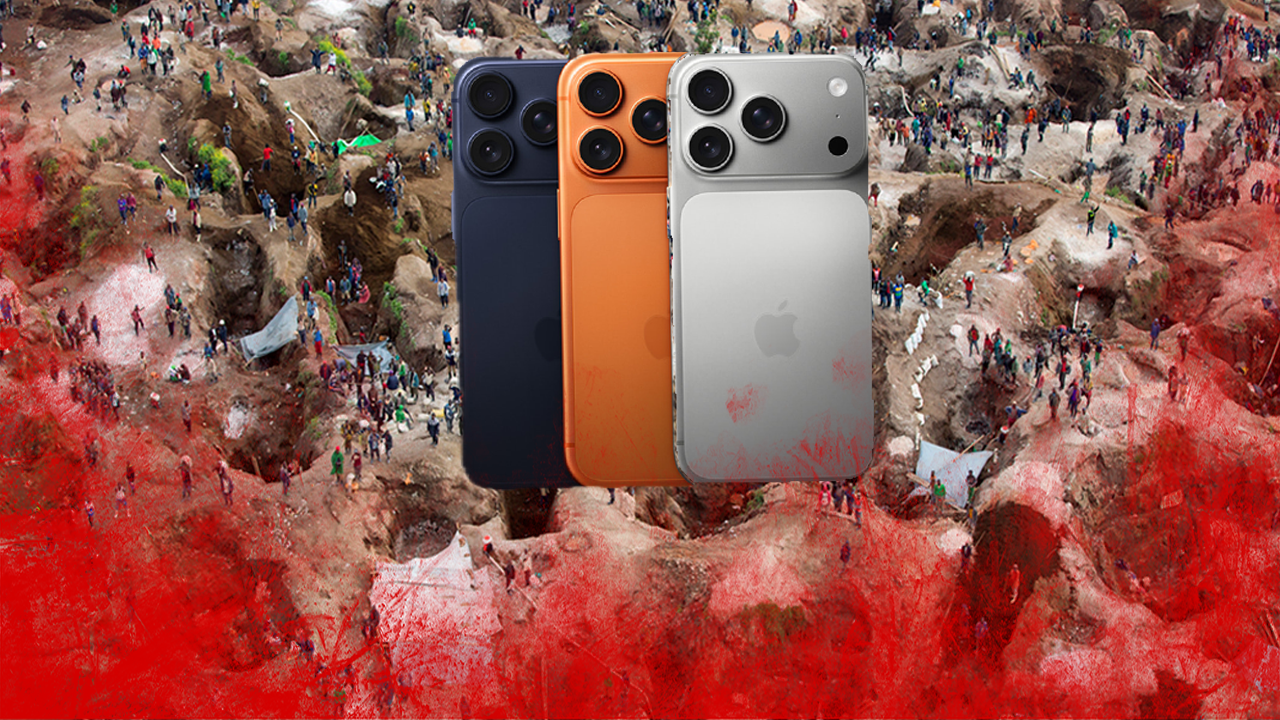
Apple’s September 2025 launch of the iPhone 17 series has been hailed as a major design refresh. A thinner titanium iPhone Air, a powerful A19 Pro chip, and advanced cameras promise to redefine mobile technology. Yet, as millions of consumers line up for preorders, another story follows Apple into the spotlight — the allegation that its products are still tied to “blood minerals” from the Democratic Republic of Congo.
Earlier this year, the Congolese government filed legal complaints against Apple, accusing the company of profiting from minerals mined in conflict zones and funneled into the global supply chain through Rwanda. These minerals — tin, tantalum, tungsten, and gold — are essential for every smartphone. They also fund violence in eastern DRC, where armed groups exploit miners, including children, under brutal conditions.
Apple denies wrongdoing, pointing to audits and its 2024 suspension of mineral sourcing from both Rwanda and the DRC. Yet, the effectiveness of these measures remains doubtful. The United Nations and human rights groups have repeatedly documented how Rwanda plays a central role in laundering Congolese minerals. Once mixed and exported, it is almost impossible to prove whether a mineral is “conflict-free.”
At the same time, Washington has signed accords with Rwanda, allowing Kigali to expand its mineral exports directly to the U.S. market. These deals are presented as steps toward stability, but on the ground, M23 rebels backed by Rwanda still control some of the richest mining sites in eastern DRC Congo. The result? Rwanda’s mineral exports are reaching record highs, while Congo continues to suffer displacement, violence, and economic loss.
This raises troubling questions. If Apple and other tech giants rely on minerals that pass through Rwanda, and if U.S. accords grant Rwanda economic rewards, who truly benefits from these so-called peace arrangements? Can the DRC ever see justice when the very delay of conflict increases Rwanda’s leverage in the global mineral trade? And most importantly, how much of the technology we celebrate — from the new iPhone 17 to other gadgets — is built on the suffering of Congolese communities?